How DFK Pozitiviti Serbia Reduced Audit Preparation Time by 40% with Tickmark 2.0
By Anja · 5 min read ·
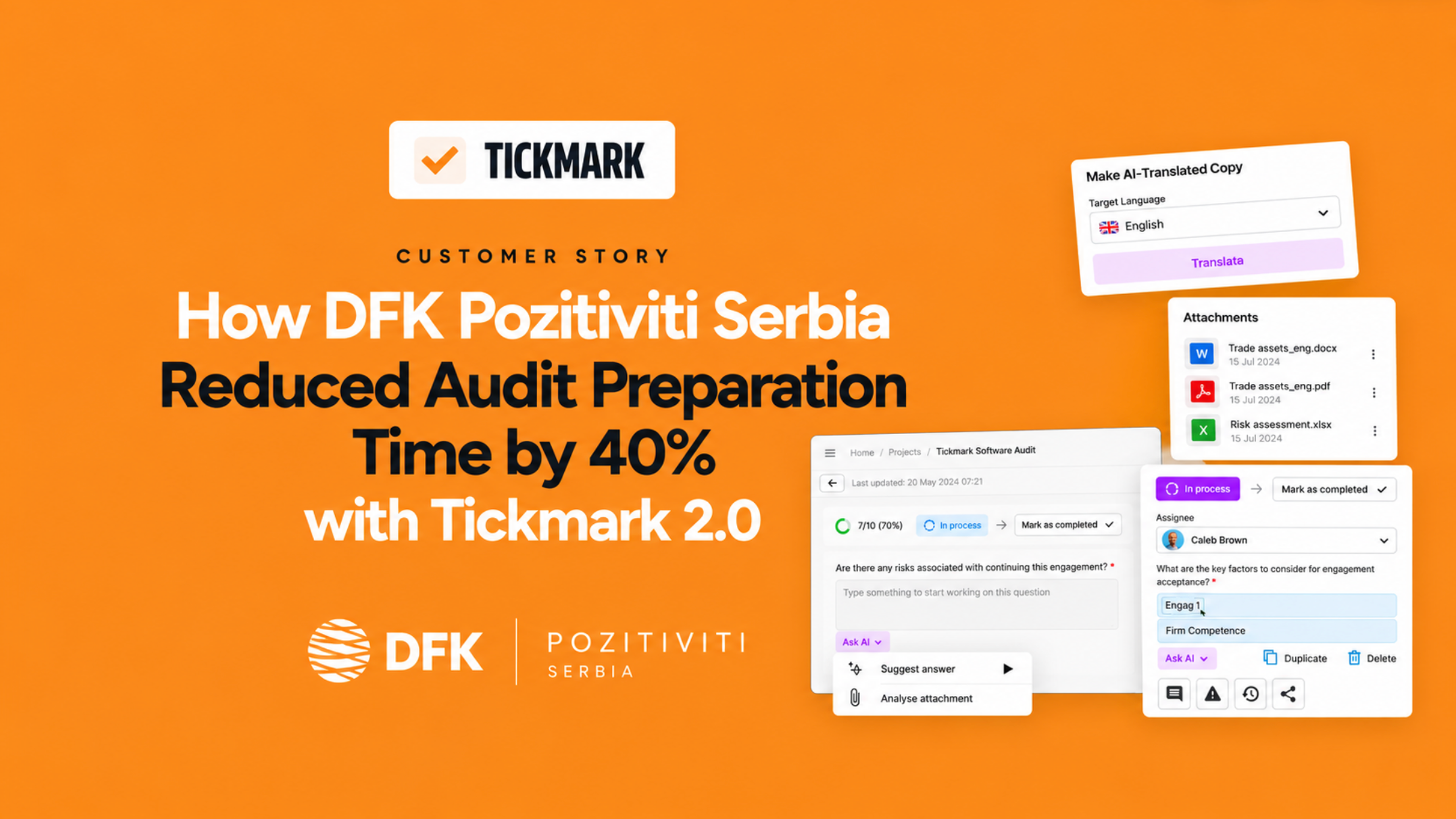
How did DFK Pozitiviti Serbia reduce audit preparation time by approximately 40%?
DFK Pozitiviti Serbia reported an approximately 40% reduction in audit preparation time after upgrading to Tickmark 2.0. By combining structured audit workflows, standardised and customisable working papers, and AI assisted documentation capabilities, the firm reduced repetitive manual tasks and improved documentation consistency across engagements.
As audit firms grow, managing engagements becomes increasingly complex. From preparing working papers and adapting documentation to meeting different regulatory requirements, administrative work can take valuable time away from professional analysis.
Here's how DFK Pozitiviti approached the transition.
About DFK Pozitiviti Serbia
DFK Pozitiviti Serbia is an established member of the international DFK network, with more than 50 professionals providing audit, accounting and advisory services.
The firm works with a range of clients, including small and medium sized enterprises (SMEs) and international groups.
As its practice expanded and engagements became more complex, the team needed audit software that could support its growth while keeping processes consistent and manageable.
The challenge: Managing increasingly complex audits
DFK Pozitiviti was already using the previous version of Tickmark. However, as the firm grew, several areas of its existing audit workflow became more difficult to manage.
The team faced challenges with:
- Scaling audit workflows: Supporting larger audit teams and more complex engagements.
- Adapting working papers: Updating templates for different industries and regulatory requirements.
- Repetitive manual work: Managing audit procedures and adjusting working papers manually.
- Cross border engagements: Localising documentation for different regulatory environments.
- Review efficiency: Reducing reliance on manual review processes.
Individually, these activities form part of everyday audit work. Together, they can create additional administrative demands, particularly as engagement complexity increases.
For DFK Pozitiviti, the opportunity was to improve efficiency without introducing further operational complexity.
The solution: A more structured audit workflow with Tickmark 2.0
To address these challenges, DFK Pozitiviti upgraded to Tickmark 2.0, focusing on automation, documentation consistency and a more integrated approach to audit management.
The implementation centred on three key areas.
1. AI assisted audit documentation
Tickmark 2.0 introduced AI assisted capabilities to support audit documentation and reduce repetitive manual tasks.
This allowed the firm to streamline parts of its documentation process and place greater emphasis on professional analysis.
2. Standardised and customisable working papers
Maintaining consistent documentation across engagements was an important requirement.
With standardised and customisable working papers, the team could adapt templates to different industries and regulatory requirements while supporting greater consistency in its audit documentation.
3. Integrated workflows and localisation
As DFK Pozitiviti worked across different regulatory environments, the ability to adapt documentation efficiently became increasingly important.
Tickmark 2.0's integrated workflow and localisation tools supported the firm's need for greater flexibility across its engagements.
Together, these capabilities provided a more structured approach to managing audit processes.
The results: Approximately 40% less audit preparation time
Following the implementation of Tickmark 2.0, DFK Pozitiviti reported measurable improvements in its audit preparation process.
Approximately 40% reduction in audit preparation time.
The firm also reported:
- A significant reduction in manual and repetitive tasks.
- Improved consistency and quality of audit documentation.
- Faster adaptation of templates across different regulatory environments.
These results reflect DFK Pozitiviti's experience following its upgrade to Tickmark 2.0 and demonstrate the potential value of combining structured workflows with AI assisted capabilities.
For the team, the improvements were not simply about completing tasks faster. They also supported a more consistent and manageable approach to audit preparation.
What DFK Pozitiviti says about Tickmark 2.0
"Tickmark 2.0 has significantly improved the efficiency of our audit processes. The combination of standardized workflows and AI-assisted features enabled our teams to reduce manual work and focus more on professional analysis. This has strengthened both our internal efficiency and the quality of our client deliverables."
Miloš Mitrić, Partner, DFK Pozitiviti Serbia
What other audit firms can learn from this experience
DFK Pozitiviti's experience highlights an important consideration for audit firms evaluating their existing processes.
Improving audit efficiency is not only about introducing new technology. It is also about understanding where manual work, documentation requirements and workflow complexity create unnecessary demands.
As audit practices grow, having a structured approach to working papers, documentation and engagement management becomes increasingly valuable.
For DFK Pozitiviti, upgrading to Tickmark 2.0 helped reduce preparation time, improve documentation consistency and support the firm's expanding audit operations.
While results will vary between firms, this case study offers a practical example of how audit workflow automation and AI assisted documentation can support a more efficient audit process.
Frequently asked questions
How can audit firms reduce audit preparation time?
Audit firms can improve preparation efficiency by standardising working papers, simplifying documentation workflows and reducing repetitive administrative tasks. DFK Pozitiviti Serbia reported approximately 40% less audit preparation time after upgrading to Tickmark 2.0.
How does Tickmark 2.0 improve audit workflow efficiency?
Tickmark 2.0 brings audit documentation, working papers and workflow management into one structured environment. Its customisable templates and AI assisted capabilities support more consistent documentation and help reduce repetitive tasks.
Can audit software support different regulatory requirements?
Audit software with customisable working papers and localisation capabilities can help firms adapt documentation to different industries and regulatory environments. DFK Pozitiviti identified this flexibility as an important part of improving its workflows.
Does AI replace professional judgement in auditing?
No. AI assisted audit tools can support documentation and repetitive tasks, but professional scepticism, interpretation, review and final audit judgements remain the responsibility of qualified auditors.
Explore a more structured approach to audit management
Looking to reduce repetitive work and improve the way your team manages audit engagements?
Discover how Tickmark 2.0 brings audit documentation, working papers and workflow management together in one environment.
Share on


Put structured audit workflows into practice
See how Tickmark helps teams standardise workpapers and simplify audit reviews.
Explore Tickmark